
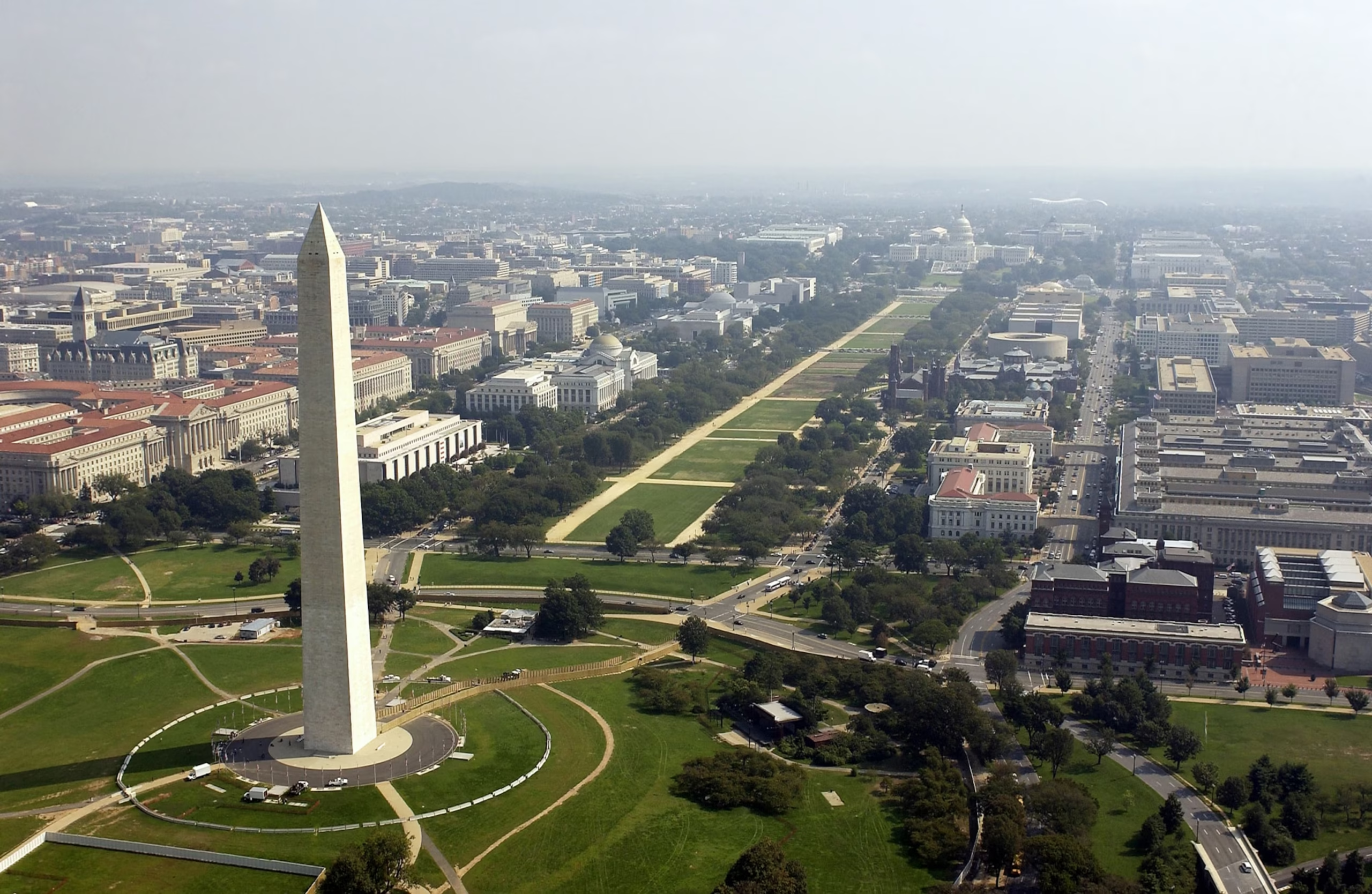
Local Recovery Solutions & Drug & Alcohol Rehab in Washington, D.C.
Local Resources & Information to Start Your Recovery Journey
If you are in the Washington D.C. area and need help now, call (240) 913-6673
Help is Available for Those Struggling with Addiction in Washington, D.C.
National monuments and fast-paced careers don’t shield residents from addiction’s quiet grip. Fortunately, help lies just across the Potomac. Whether you’re struggling with pills that have become just a little too frequent or drinking that’s gotten into your daytime schedule, there are treatment options available that fit not only your treatment needs, but your lifestyle requirements as well.
There are levels of care for every situation, and a range of professionals and peer support pillars ready to help get you through even your toughest sober days. It can all start with just a phone call. If you’re tired of dealing with the struggles of withdrawal, take a look at the treatments that could help you live a better, healthier life inside the Beltway.
Types of Addiction Treatment in Washington, D.C.
Our team coordinates withdrawal care at nearby top-tier medical detox facilities. Admissions handles D.C. Medicaid approvals, books Lyft rides, and shares labs so the clinical team can resume treatment the moment detox is complete. Once the detox treatment is complete, usually under 7 days, you can plan a transfer to a PHP or IOP framework.
During a PHP treatment, the patient visits the recovery center each weekday for 6 to 8 hours. During this time, extensive educational programming and relapse prevention measures are implemented. Mornings often center on CBT and DBT group skill-building, while afternoons typically transition to a more therapeutic setting, featuring group and individual sessions, as well as experiential modules. Clients go home each evening so that they can apply their skills to real-world triggers.
Outpatient treatment typically consists of virtual or in-person evening groups, accommodating lobbying dinners and late votes. Sessions weave DBT emotion-regulation, relapse-prevention strategy, and medication management. These treatment programs typically require about 3 hours per visit, with as few as 2-3 visits per week needed to maintain consistency.
How to Choose the Right Drug Rehab Center for Your Loved One in Washington, D.C.
When you’ve finally chosen to get professional help, the number of treatment options out there can feel a little daunting. To simplify the search, just keep these few considerations in mind, and it should put things in perspective for you:
-
00 01
Department of Health

First, ensure that your addiction treatment center is legitimate and meets certain standards. This means they should have accreditation from CARF or The Joint Commission, as well as a valid certification from the District of Columbia Department of Health.
-
00 02
Insurer

Next, ensure they’re in-network with your insurer, which will save you a significant amount on copays.
-
00 03
Evidence-based Treatments

Then, check to see if they offer evidence-based care standards, such as DBT and CBT, and if they provide integrated care for dual diagnosis, as required by your treatment plans.[1]
-
00 04
Aftercare Plan

Next, ensure they’re able to create a comprehensive aftercare plan for post-graduation recovery and maintenance.
-
00 05
Schedule a Visit

Finally, schedule a visit. When you’re entering drug & alcohol rehab in Washington, D.C., you’ll be in the program for at least a few weeks. Ensure the staff feel like a good fit.
Continuing Recovery Care & Sober Living Programs in Washington, D.C.
The ongoing stresses of the District mean that those in recovery need a reliable and consistent structure. Many graduates choose sober-living townhouses in Capitol Hill or Columbia Heights. These are metro-accessible homes with peer-elected leadership and weekly accountability meetings. Household chore sharing, such as cooking, cleaning, and shopping, helps residents build self-reliance while also learning to share the workload.
Once clients graduate, sobriety becomes more ingrained in daily life, and alumni engagement turns long-term theory into a practical, daily lifestyle. Your aftercare plan will help outline how many meetings you should attend and what additional support you’ll need, but it should also include your plans for community service, finding hobbies, and other aspects of life that were neglected during addiction. Alumni organizations will often arrange a substantial portion of this with volunteer days, mentorship programs, and regular meetings.
Emergency Services for Addiction in Washington, D.C.
If you see someone displaying the signs of overdose, like blue lips, slow breathing, and loss of consciousness, call 911 right away. If you need other 24-hour addiction-related help, you can try:

Community Resources for Mental Health & Addiction
- 988: National Crisis Line
- 888-793-4357: DC Dept. Behavioral Health Helpline
Alcoholics Anonymous
SMART Recovery
Refuge Recovery
Narcotics Anonymous
Narcan Classes and Overdose Prevention Training
Local Stats You Need to Know
The District might be full of policy briefings and power, but none of that can mask the rot that is evident in the data. The DC Health Opioid Dashboard counted 345 opioid-involved deaths in 2024, with fentanyl found in the resulting toxicology report for nearly 100% of them .[2][3] There are certainly hotspots for addiction in the District, with fatalities higher in Wards 7 and 8, but there are overdose calls across the entire beltway, so the root problem spans zip codes and tax brackets.
It’s the same story with alcohol abuse, with more than a full quarter of D.C. adults reporting on the CDC National Survey on Drug Use and Health that they have had problematic drinking in the past month.[4] At 26%, that’s higher than any other location in the Mid-Atlantic region .[5] This has led to a surge in alcohol-related trauma admissions. When you add in the stress of the Hill, criminally high rents, and mental health access that’s inconsistent at best, there is an undeniable need for top-tier dual-diagnosis programs, and leading drug & alcohol rehab in Washington, D.C.
Start Your Recovery in Washington, D.C.
Deadlines, debates, and busyness may seem like they’re taking top priority, but your health is more important. But the cost of continuing on a harmful path can be catastrophic. If you need professional help, don’t wait; reach out to a drug & alcohol rehab in Washington, D.C., and start your recovery today.
Sober Activities in Washington, D.C.
- Turn monuments into milestones. Jog the National Mall at dawn, racing your own best times while monuments glow pink.
- Join the Smithsonian’s Art Lab workshops, where you can sculpt clay while curators sneak in mindfulness prompts.
- Paddle a kayak on the Potomac from Thompson Boat Center, practicing urge-surf breathing with every stroke past the Kennedy Center.
- Volunteer with Capital Area Food Bank, sorting produce and meeting mission-driven peers for sober networking.
- Attend Politics & Prose bookstore’s author talks, letting insight and edification take the place of zoning out.
- Explore Kenilworth Aquatic Gardens photo safaris on Saturdays, capturing lotus blooms and logging gratitude journal entries between shots.
How to Pay for Addiction Treatment in Washington, D.C.
Choosing to get substance use disorder treatment can be emotional enough before you start to think about how to pay for it. Being able to afford treatment should never be a barrier to recovery; therefore, numerous options are available for individuals entering recovery.
Primary payment methods for substance abuse treatment in the District will usually start with private insurance or D.C. Medicaid, which can cover PHP, IOP, and aftercare coordination once medical criteria are met. Alpas Wellness is in-network with CareFirst, Aetna, UnitedHealthcare, and Cigna, and our staff is available to assist with prior authorizations.
If you’re one of the many residents of D.C. who are living without insurance, there are options for you as well. Explore treatment vouchers from the D.C. Department of Behavioral Health and SAMHSA-funded programs, which can substantially reduce treatment and medication costs.
Finally, if you’re still facing a balance that you can’t pay, talk with your service provider. In many cases, treatment centers will offer some degree of in-house financing. This can help spread the remaining amount due over 6 to 12 monthly payments.
Frequently Asked Questions About Drug & Alcohol Rehab in Washington, D.C.
Will insurance cover detox placement?
Most private plans and D.C. Medicaid pay hospital fees once medical necessity is confirmed.
How flexible is IOP if I often work late?
Virtual evening sessions accommodate unpredictable Hill schedules.
Can out-of-state family join therapy?
Absolutely. Family and support are crucial components of the recovery process. We can arrange secure video links for family members who are unable to attend sessions in person.
Are service animals permitted?
Certified service animals are welcome, provided vaccination records accompany them. Emotional support animals, however, require special approval from program administrators.
How long is after-care support?
Alumni coaching, app check-ins, and peer support meet-ups remain available indefinitely at no extra cost.
Other Nearby Locations

Dimeff, L. A., & Linehan, M. M. (2008, June). Dialectical behavior therapy for substance abusers. Addiction science & clinical practice. https://pmc.ncbi.nlm.nih.gov/articles/PMC2797106/
Centers for Disease Control and Prevention. (2023b, July 19). BRFSS prevalence & trends data: Home. Centers for Disease Control and Prevention. https://www.cdc.gov/brfss/brfssprevalence/index.html
Centers for Disease Control and Prevention. (2023b, July 19). BRFSS prevalence & trends data: Home. Centers for Disease Control and Prevention. https://www.cdc.gov/brfss/brfssprevalence/index.html